
One of the questions that comes up most often at the start of a coaching engagement is surprisingly simple: how will we know whether it’s working?
It’s an important question because coaching creates change in places that don’t always fit neatly into a spreadsheet. Greater self-awareness, stronger relationships, better conversations, renewed confidence and clearer decision-making often show up long before they appear in traditional business metrics, yet these shifts are frequently what create the conditions for meaningful organisational change.
Over the years, we found ourselves returning to the same challenge. Organisations wanted to understand the impact of coaching in a way that felt tangible, while still respecting the very human nature of the work itself. That challenge eventually led us to develop RO(C)I, our Return on Coaching Investment framework. The goal was to create a clearer way of understanding the relationship between personal growth and organisational outcomes, recognising that the two are often more connected than they first appear.
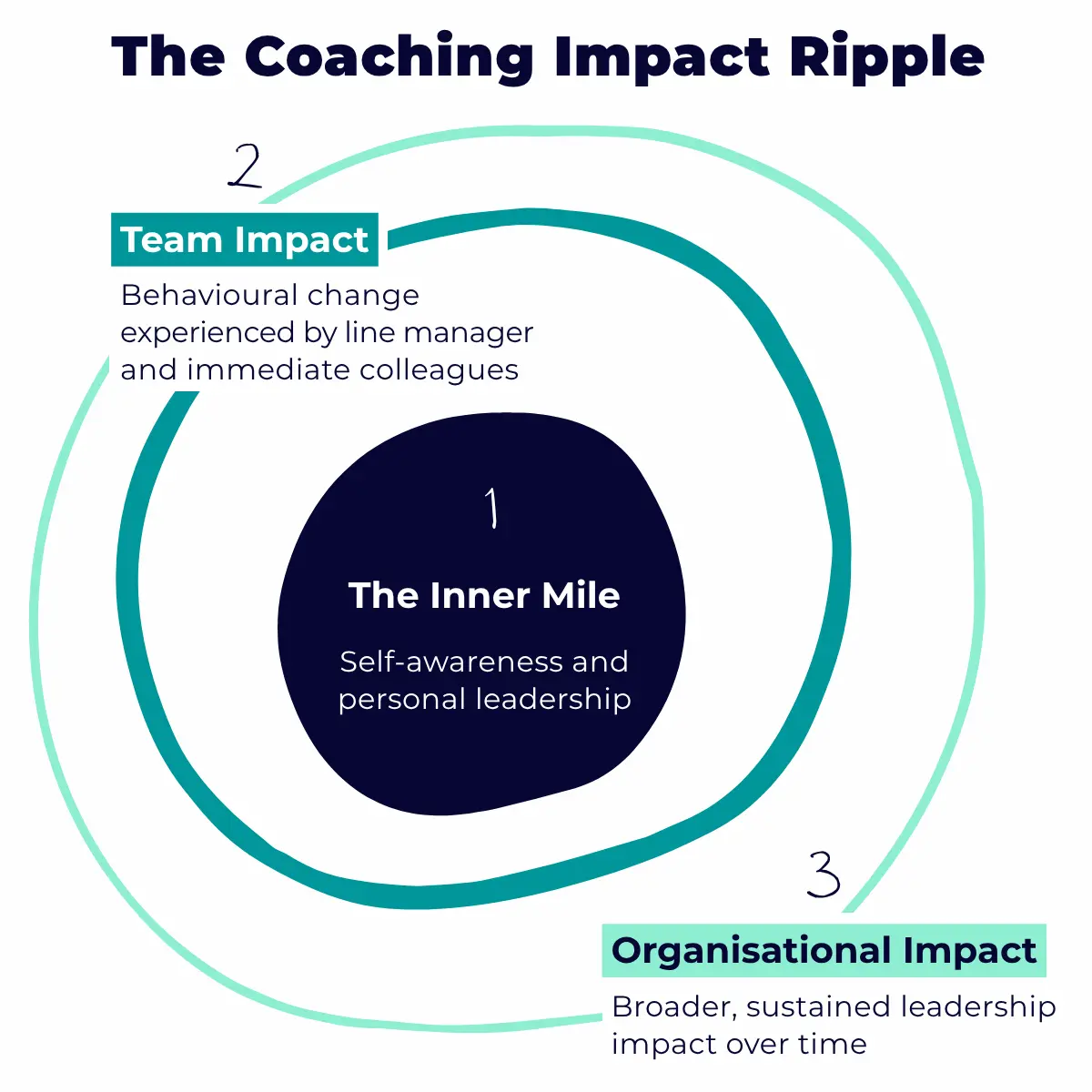
What RO(C)I taught us was something we now see in almost every engagement: the things that matter most are rarely isolated from business performance. Trust influences collaboration, self-awareness influences leadership effectiveness and confidence influences decision-making. Human growth has a way of showing up in business outcomes, even when the connection isn’t immediately obvious.
The more we explored that relationship, the clearer it became that organisations don’t have to choose between measuring outcomes and valuing people. The most meaningful change tends to involve both.
If you’re exploring coaching within your organisation and wondering how to measure its impact, let’s continue the conversation.